
Lucky Jet Strategy
A successful Lucky Jet Strategy is built on clarity, discipline, and a realistic understanding of how Lucky Jet works. The goal is not to “beat the system” but to avoid chaotic decisions and create consistency. The best approach combines structured bankroll rules, well-tested tactics, and emotional control. Many players search for complex theories or hidden mechanics, but the truth is simple: stability comes from calculated actions, not risky chasing. This guide explains reliable principles, real-world planning techniques, and Lucky Jet Tips that help maintain balance throughout every gaming session. By focusing on verified logic instead of myths, you can build Lucky Jet Best Strategies that support smarter, safer gameplay.
The Foundation of Winning: Bankroll Management
Every Lucky Jet Strategy must begin with responsible bankroll management. Without limits, even strong tactics collapse quickly. Bankroll management prevents emotional mistakes, protects long-term balance, and ensures you never risk more than you can afford. Creating clear boundaries allows players to follow their Lucky Jet Game Strategy without panic or overconfidence.
The 10% Rule for Deposit Safety
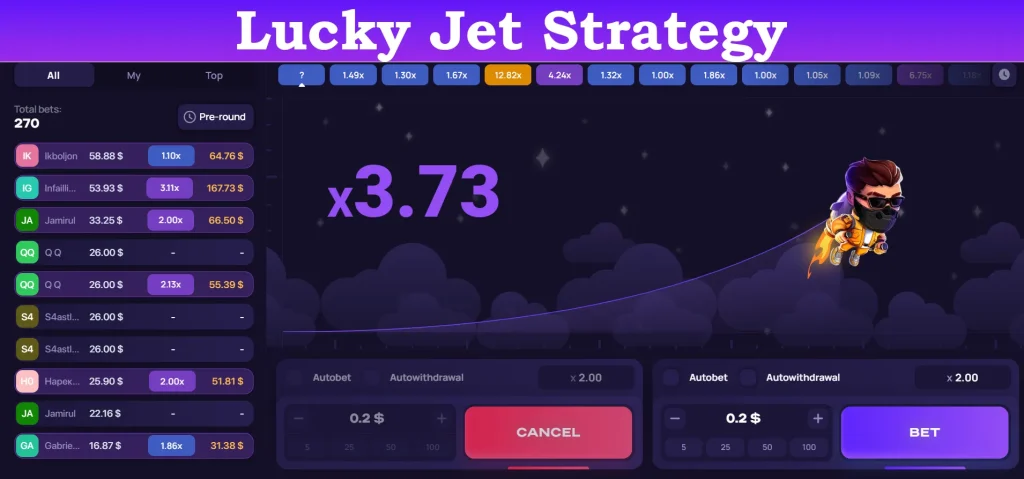
A fundamental guideline is the 10% rule: never place bets larger than 10% of your total balance. This protects your bankroll from sudden crashes and gives you enough rounds to test the session’s rhythm. Small, controlled bets reduce stress and help build better decision-making habits. This simple rule is one of the strongest components of any reliable Lucky Jet Strategy.
Setting Stop-Loss and Take-Profit Limits
Stop-loss limits prevent further losses when sessions turn cold, while take-profit limits stop you from overplaying after wins. These boundaries ensure emotional stability and keep every session structured. Players who follow these limits remain consistent, while those ignoring them often fall into impulsive betting.
Single Bet Strategies for Beginners
Beginners should start with simple, low-risk models. These strategies focus on stable, repeatable actions rather than high-volatility goals.
The “Cautious Joe” (x1.10) Strategy
This entry-level tactic targets small multipliers like x1.10–x1.20. The logic is simple: accumulate small gains steadily while avoiding dangerous volatility. Although no multiplier is guaranteed, this method helps new players understand timing and avoid panicked reactions.
The “Moderate Risk” (x2.00) Flat Betting
Flat betting at x2.00 is a structured approach suitable for controlled sessions. You repeat the same stake and target, relying on balanced risk. The appeal of this method lies in its simplicity—no progression systems, no aggressive chasing. It’s a stable foundation for players looking to build a strategy with predictable behavior.
Advanced Double Bet Strategies
Players who gain confidence often look for more dynamic setups. Lucky Jet Strategies involving two simultaneous bets allow you to balance safety and potential profit. These methods are more complex than beginner tactics but provide greater flexibility in changing game conditions.
The “2:1 Insurance” Tactic
This approach uses two bets: a small, safe bet with an auto-cashout at a low multiplier, and a second, larger bet targeting a higher multiplier. The first bet serves as insurance, covering partial losses if the second one fails. This creates a stabilizing effect, allowing you to take controlled risks. It is a structured Lucky Jet Strategy that prevents huge drawdowns when testing higher targets.
High-Low Combo System
The high-low system sets one bet at a very low exit point—like x1.20—and the second bet at a much higher target. This spreads risk across two outcomes. Even when the high target is missed, the low exit helps maintain balance. This technique mimics the logic behind 1win Lucky Jet Tricks, where players combine consistency with occasional attempts at bigger multipliers.
The “Ladder” Strategy
The ladder relies on gradually increasing cashout targets after winning rounds. For example, after cashing out at x1.30, you might aim for x1.50 next, then x1.80, and so on. However, once a loss occurs, you return to the base multiplier. This tactic helps explore round cycles while keeping losses manageable. Players who want a Lucky Jet New Strategy often experiment with this method.
Mathematical Betting Systems Applied to Lucky Jet
Many casino enthusiasts adapt traditional betting systems to the crash-game environment. While none guarantee profits, they can help structure your session. Incorporating them into your overall strategy adds discipline and a more predictable pacing.
The Martingale System
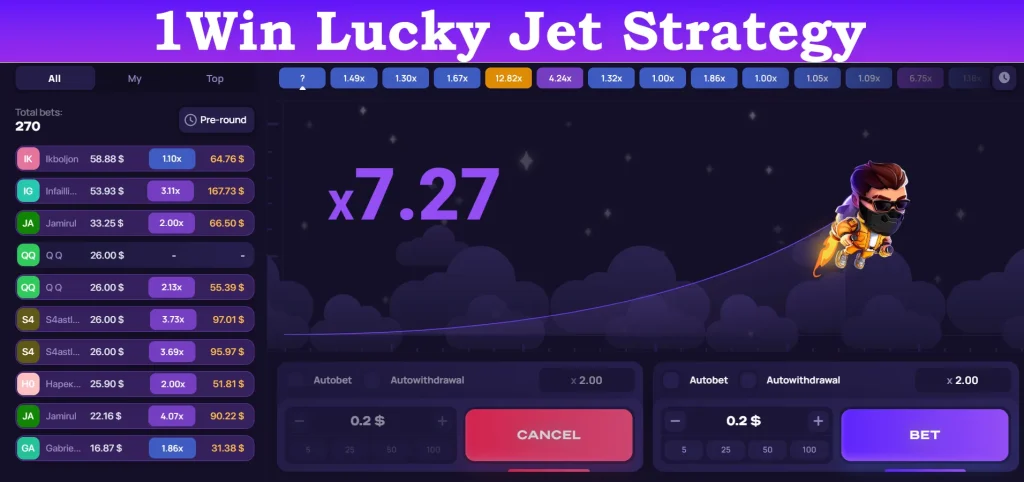
Martingale requires doubling your bet after each loss. Although it may look effective, it is extremely risky in crash games like Lucky Jet. A long streak of low multipliers can drain the entire balance quickly. Because of the fast pace of rounds, losses accumulate rapidly, making this system dangerous for most players.
The D’Alembert System
D’Alembert modifies your bet gradually instead of doubling it. After each loss, you increase the stake by one unit; after each win, you decrease it by one. This system creates smoother progressions and is less punishing than Martingale. It fits well into structured 1win Lucky Jet Strategy plans.
Fibonacci Sequence for Crash Games
The Fibonacci system increases bets following the famous sequence: 1, 1, 2, 3, 5, 8, etc. This system spreads risk more evenly and avoids dramatic jumps. However, even moderate progressions can cause rapid losses if the game enters a cold streak.
Analyzing History and Patterns
Pattern observation helps players understand rhythm, but it should never be confused with real prediction. History shows trends, not guarantees.
Time-Based Patterns: Myth or Reality?
Many believe that timing—for example, “a big multiplier appears every 5 minutes”—can predict outcomes. In reality, such patterns are illusions. The server determines the multiplier independently for every round, so time-based theories cannot replace good Lucky Jet Strategy.
Common Mistakes That Drain Your Budget
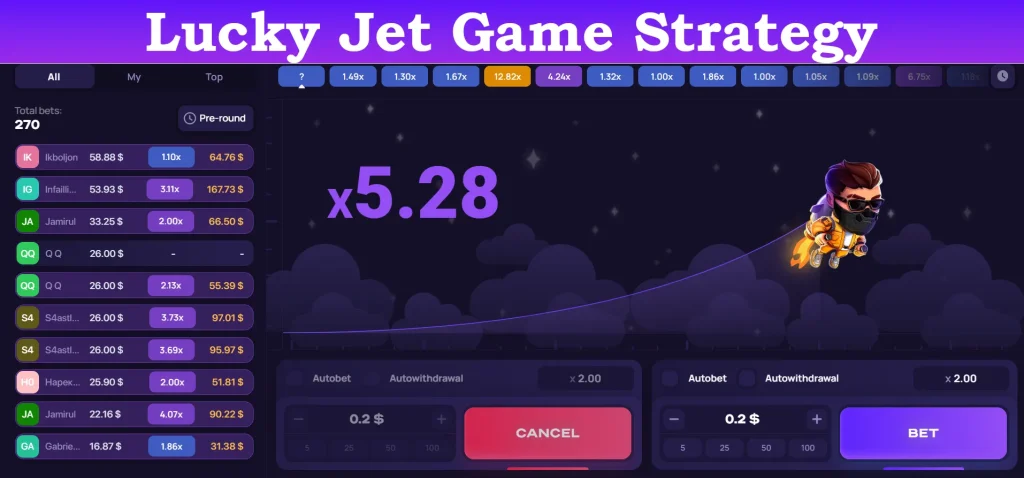
Even the strongest strategy will fail if players fall into common behavioral traps. Crash games move quickly, and emotional decisions often lead to unnecessary losses. Understanding the mistakes that drain your balance is an important part of building stable Lucky Jet Strategies.
Relying on “100% Predictor” Software
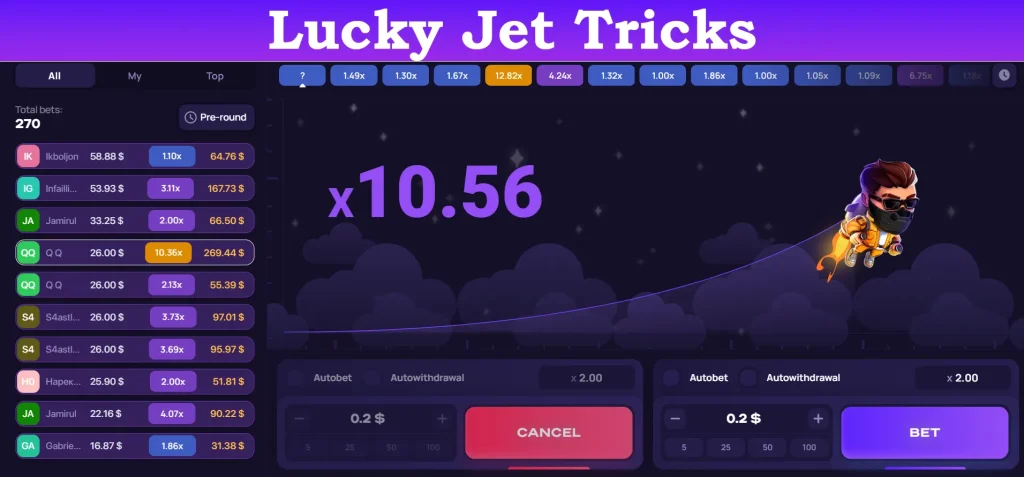
One of the biggest errors is trusting apps or bots that claim guaranteed wins. These programs cannot access the server logic of the game, so they fabricate predictions based on random sequences or visible history. Using fake Lucky Jet predictors disrupts discipline and creates unrealistic expectations. Any tool that advertises absolute certainty is misleading. Real strategy depends on reasoning and risk control—not on magical “AI” guesses.
Playing Without Auto-Cashout
Another damaging mistake is refusing to use auto-cashout. Many players try to cash out manually to “wait for a better moment,” but this leads to hesitation and emotional reactions. Auto-cashout sets clear boundaries and ensures decisions remain consistent. It acts as a safety mechanism inside your Lucky Jet Game Strategy, especially during fast, unpredictable rounds. Without it, even experienced players often overestimate how long they should stay in a round.
FAQ
What is the safest Lucky Jet Strategy for beginners?
Do patterns help create better strategies?
Is double betting suitable for new players?
Can mathematical systems guarantee wins?
What are the best Tips for long sessions?
What should I avoid when choosing strategies?
Does history help build a strategy?
Can I use timing to improve results?



My name is Rohan Sen, and I explain how to approach Lucky Jet with a clearer mindset – not through secret formulas, but through realistic understanding. That game is unpredictable, and no strategy can control its crash point. What can be managed is how you react to fast rounds, rising multipliers and the pressure to hold on “just a little longer.”
Here, I break down the habits that often cause mistakes, the emotional traps players fall into, and the behaviours that lead to unnecessary risk. My goal is to offer practical, responsible guidance that helps you think steadily and stay grounded while navigating a highly volatile game.